As a supplier of 4WRAE products, I often encounter questions from customers about the mathematical or scientific meaning behind the term "4WRAE." In this blog post, I will delve into this topic, exploring whether 4WRAE holds any mathematical or scientific significance and how it relates to the products we supply.
Understanding the Basics of 4WRAE
4WRAE is a designation commonly used in the field of hydraulic proportional valves. These valves play a crucial role in hydraulic systems, allowing for precise control of fluid flow and pressure. The "4WRAE" name is part of a standardized naming convention used by manufacturers to identify specific types of valves.
The "4" in 4WRAE typically refers to the number of ports on the valve. A four - port valve is designed to control the flow of hydraulic fluid in a more complex way compared to valves with fewer ports. This allows for more sophisticated control of hydraulic actuators, such as cylinders or motors.
The "W" often stands for "Wege" in German, which translates to "way." It indicates the number of flow paths or directions that the valve can control. In the case of 4WRAE valves, they are designed to control the flow in multiple ways, providing flexibility in hydraulic system design.
The "R" usually represents "Regelventil," which means control valve in German. This emphasizes the valve's function of regulating the flow and pressure of the hydraulic fluid.
The "AE" might have different meanings depending on the manufacturer, but it often indicates some specific features or characteristics of the valve, such as a particular type of control mechanism or a specific design modification.
Mathematical and Scientific Aspects of 4WRAE Valves
Flow Rate and Pressure Control
From a mathematical perspective, the operation of 4WRAE valves is based on principles of fluid dynamics. The flow rate of hydraulic fluid through the valve is governed by equations such as the Bernoulli's equation and the continuity equation.
The Bernoulli's equation states that the sum of the pressure energy, kinetic energy, and potential energy per unit volume of a fluid remains constant along a streamline. In the context of a 4WRAE valve, this equation helps in understanding how changes in pressure and velocity of the fluid occur as it passes through the valve.
The continuity equation, which states that the mass flow rate of an incompressible fluid is constant at all points in a pipe or conduit, is also crucial. It allows us to calculate the flow rate of the fluid based on the cross - sectional area of the valve ports and the velocity of the fluid.
For example, if we know the cross - sectional area of the valve port and the pressure difference across the valve, we can use these equations to predict the flow rate of the hydraulic fluid. This is essential for designing hydraulic systems that require precise control of fluid flow.
Proportional Control
4WRAE valves are often used in proportional control systems. Proportional control is a scientific concept that involves adjusting the output of a system in proportion to the input. In the case of 4WRAE valves, the input is typically an electrical signal, such as a 4 - 20 mA current, and the output is the flow rate or pressure of the hydraulic fluid.
The relationship between the input signal and the output of the valve can be described by a transfer function. This transfer function is a mathematical representation of how the valve responds to changes in the input signal. By understanding this transfer function, engineers can design control systems that can accurately regulate the hydraulic fluid flow and pressure.
Products We Supply
As a 4WRAE supplier, we offer a range of products that are designed to meet the diverse needs of our customers.


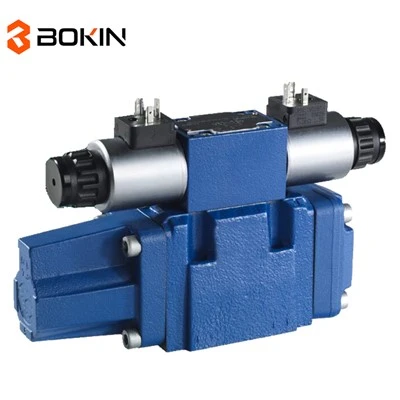
One of our popular products is the Pilot - Operated Hydraulic Proportional Valve 4WRZE10 F1 4 - 20mA Control. This valve is a pilot - operated type, which means it uses a small - scale control signal to operate a larger main valve. It is suitable for applications that require high - precision control of hydraulic fluid flow and pressure.
We also supply the Proportional Hydraulic Control Valve. This valve provides a cost - effective solution for proportional control of hydraulic systems. It is designed to be easy to install and maintain, making it a popular choice for many industrial applications.
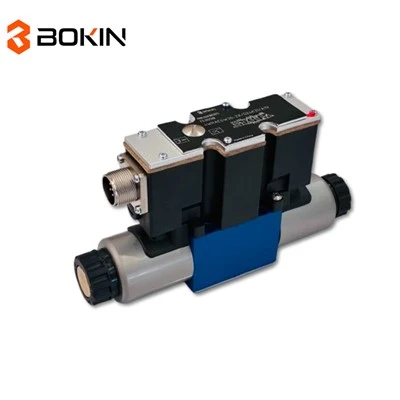
Another product in our portfolio is the Direct - Operated Hydraulic Proportional Valve 4WRAE6 F1 4 - 20mA Control. This direct - operated valve is ideal for applications where a simple and compact design is required. It offers fast response times and high accuracy in controlling the hydraulic fluid flow.
Conclusion and Call to Action
In conclusion, 4WRAE has both mathematical and scientific meanings. The naming convention provides information about the valve's structure and function, while the operation of these valves is based on well - established principles of fluid dynamics and proportional control.
If you are in the market for high - quality 4WRAE valves for your hydraulic system, we invite you to contact us for more information. Our team of experts can help you select the right product for your specific needs and provide you with technical support throughout the purchasing process. Whether you are working on a small - scale project or a large - scale industrial application, we have the products and expertise to meet your requirements.
References
- Fluid Mechanics textbooks for principles of Bernoulli's equation and continuity equation.
- Hydraulic system design manuals for information on proportional control and valve operation.