Hey there, fellow English learners and enthusiasts! I'm here to share some tips on how to teach the concept of "4WRTE" to English learners. As a supplier of 4WRTE products, I've had my fair share of experiences in explaining these technical terms to people from different backgrounds. So, let's dive right in!
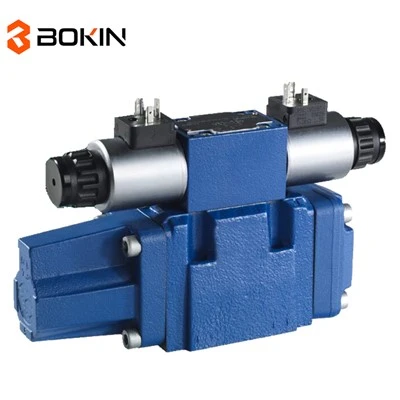
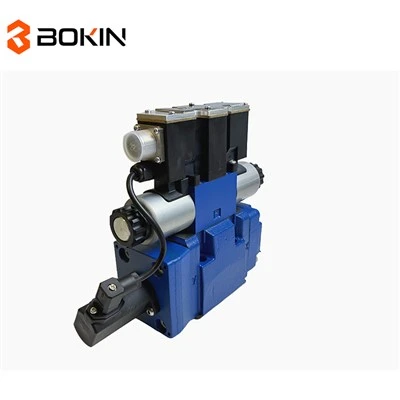
First off, what the heck is 4WRTE? Well, 4WRTE refers to a type of pilot - operated hydraulic directional valve. These valves are pretty crucial in the field of hydraulics, used to control the flow of hydraulic fluid in various systems. For English learners, especially those interested in engineering or technical fields, understanding these terms is super important.
When teaching 4WRTE to English learners, it's essential to start with the basics. You can't just jump right into the complex technical details. Begin by explaining what a hydraulic system is. A hydraulic system uses liquid (usually oil) to transfer power. It's like a network of pipes and valves that work together to make machines move.
Once they have a basic understanding of hydraulics, you can introduce the concept of directional valves. Directional valves are like traffic cops for the hydraulic fluid. They decide where the fluid goes, whether it should flow forward, backward, or stop altogether.
Now, let's talk about the "4WRTE" part. This is a specific model of pilot - operated hydraulic directional valve. The "4" usually indicates the number of ports in the valve, which means there are four places where the hydraulic fluid can enter or exit. The "W" might stand for a particular design feature or a specific type of operation. The "R" and "T" are often related to the internal structure and function of the valve, and the "E" could be for an electronic control feature.
To make it easier for English learners to understand, you can use real - life examples. For instance, think of a construction machine like a bulldozer. The hydraulic system in a bulldozer uses 4WRTE valves to control the movement of the blade. When the operator wants to lift the blade, the 4WRTE valve directs the hydraulic fluid to the appropriate cylinder, making the blade go up.


Another way to teach this is through visual aids. You can show them diagrams of 4WRTE valves. These diagrams can clearly show the different parts of the valve, like the ports, the spool, and the solenoids. There are also many online videos that demonstrate how these valves work. Watching a real - time demonstration can be much more effective than just reading about it.
Let's take a look at some specific models of 4WRTE valves. There's the Pilot - Operated Hydraulic Directional Valve 4WRTE10 A1 10V Control. This valve is suitable for smaller hydraulic systems. It has a relatively compact design and is often used in applications where space is limited.
Then we have the Pilot - Operated Hydraulic Directional Valve 4WRTE32 A1 10V Control. This is a larger valve, designed for more heavy - duty applications. It can handle higher flow rates and pressures, making it ideal for big machines like industrial presses.
And don't forget the Pilot - Operated Hydraulic Directional Valve 4WRTE25 A1 10V Control. This valve is a middle - ground option, offering a good balance between size and performance.
When teaching, you can also encourage English learners to practice using the technical terms in sentences. For example, "The 4WRTE10 valve controls the flow of hydraulic fluid in this small hydraulic system." Or "We need to replace the 4WRTE32 valve in the large press machine."
It's also a good idea to have some hands - on activities. If possible, you can show them a real 4WRTE valve and let them take a look at it, touch it, and try to understand how it's put together. This tactile experience can really help solidify their understanding.
In addition to the technical aspects, it's important to teach the vocabulary associated with 4WRTE valves. Words like "port", "spool", "solenoid", "hydraulic fluid", and "pressure" are all key terms. You can create flashcards with these words and their definitions, and have the learners practice using them in conversations.
Another useful teaching method is group discussions. Divide the learners into groups and give them a problem related to 4WRTE valves. For example, "Suppose a 4WRTE25 valve is not working properly. How would you troubleshoot it?" This kind of discussion can encourage critical thinking and help the learners apply what they've learned.
Now, if you're an English learner interested in 4WRTE valves, or if you're a teacher looking for more resources, don't hesitate to reach out. We're here to help you understand these complex technical concepts. Whether you're a beginner or have some prior knowledge, we can provide you with the information and support you need. And if you're in the market to purchase 4WRTE valves, we're your go - to supplier. We offer high - quality products and excellent customer service. So, feel free to get in touch for more details and to start a purchase negotiation.
References:
- Hydraulic System Handbook
- Technical Manuals of 4WRTE Valves