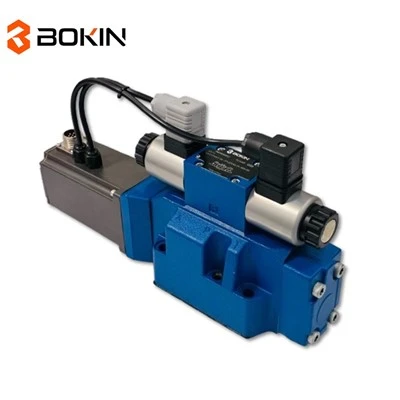
Check valves perform the simplest function in hydraulics - allow flow in one direction and block it in reverse - yet they enable several critical circuit functions that every hydraulic system designer should understand.

Standard check valves open when inlet pressure exceeds the spring force plus any downstream back pressure. The spring is typically light, producing a cracking pressure of 0.05 to 0.5 MPa, though stronger springs can be specified for back-pressure applications. Three field-proven applications dominate:
Pump isolation: a check valve between the pump outlet and the system prevents backflow when the pump stops, maintaining accumulator or system pressure through the check valve's reverse sealing.
Dual-pump circuit separation: when two pumps feed a common system at different pressure levels, check valves prevent the high-pressure circuit from back-feeding into the low-pressure pump.
Back pressure generation: installing a check valve with a 0.3-0.5 MPa spring in the return line creates controlled back pressure. This eliminates cylinder judder and impact during directional shifts by ensuring the return side never drops to zero pressure instantaneously.
Pilot-operated check valves add a control port that, when pressurized, mechanically forces the valve open - allowing reverse flow on command. Two high-value applications make these valves essential:
Vertical load holding: on a vertically mounted cylinder, a pilot-operated check valve on the rod-side port locks the load in position when the directional valve centers. Without this, internal leakage through the directional valve spool would allow the cylinder to creep downward. The pilot signal from the opposite cylinder port releases the lock only when intentional downward movement is commanded.
Hydraulic locking circuits: two pilot-operated check valves arranged in a cross-piloted configuration create a bidirectional locking circuit - both cylinder ports are sealed until hydraulic pressure is applied to one side. This configuration is standard on outrigger cylinders for mobile equipment, fixture clamping circuits, and any application where the cylinder must hold position indefinitely against external force.
For electro-hydraulic systems requiring both directional control and load-holding, integrating Rexroth Type pilot-operated check valves or combining sandwich-mounted check modules with proportional directional valves provides a compact, reliable solution without external pipework.