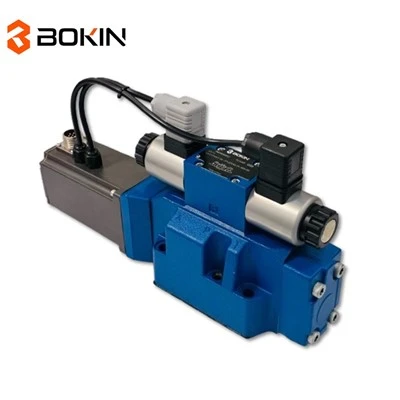
Normal Pressure Relief Range
The normal pressure relief range for proportional valves in hydraulic systems is generally recommended to be set between 5% and 10% of the system's operating pressure. This range is set based on considerations of system stability and safety. Excessive pressure relief may lead to low system efficiency, while insufficient pressure relief may increase the risk of system failure.
For example, if the hydraulic system's operating pressure is set to 100 bar, then the normal pressure relief range should be between 5 bar and 10 bar. This setting ensures that the system operates efficiently while maintaining sufficient stability and safety.
Factors Affecting Pressure Relief Value
In practical applications, the pressure relief value is affected by several factors. First, the system's operating pressure; the higher the operating pressure, the higher the corresponding pressure relief value. Second, the system's operating environment and temperature; high-temperature environments may cause fluid expansion, thus affecting the pressure relief value. Furthermore, the type and viscosity of the fluid also affect the pressure relief.
How to Adjust the Pressure Relief Setting
Adjusting the pressure relief setting of a proportional valve requires comprehensive consideration of the actual system conditions. Generally, the pressure relief value can be changed by adjusting the spring preload of the proportional valve or by replacing the spring with one of different stiffness. Alternatively, an electronic control system can be used for precise pressure relief adjustment.
When setting the pressure relief, it is recommended to perform theoretical calculations first, and then make fine adjustments based on actual conditions. It is crucial to regularly inspect and maintain the hydraulic system to ensure that the pressure relief value remains within the normal range.