In the dynamic world of hydraulic systems, proportional directional control valves play a pivotal role in regulating fluid flow, pressure, and direction. These valves are essential components that enable precise control over hydraulic actuators, ensuring smooth and efficient operation in a wide range of industrial applications. As a leading supplier of proportional directional control valves, we understand the diverse needs of our customers and offer a comprehensive range of products to meet their specific requirements.
Understanding Proportional Directional Control Valves
Proportional directional control valves are designed to provide continuous control of fluid flow and direction based on an electrical input signal. Unlike traditional on-off valves, which can only be fully open or fully closed, proportional valves can vary the flow rate and direction in proportion to the input signal. This allows for precise control of hydraulic actuators, such as cylinders and motors, enabling smooth and accurate movement.
The basic principle behind proportional directional control valves is the use of an electromagnetic solenoid to control the position of a spool within the valve body. The solenoid is energized by an electrical signal, which creates a magnetic field that moves the spool. The position of the spool determines the flow rate and direction of the fluid passing through the valve.
Types of Proportional Directional Control Valves
There are several types of proportional directional control valves available in the hydraulic market, each with its own unique features and advantages. The following are some of the most common types:
Direct-Acting Proportional Directional Control Valves
Direct-acting proportional directional control valves are the simplest type of proportional valve. They consist of a solenoid-actuated spool that directly controls the flow of fluid through the valve. These valves are typically used in applications where a relatively low flow rate and pressure are required.
One of the main advantages of direct-acting proportional valves is their simplicity and reliability. They have a relatively low cost and are easy to install and maintain. However, they are limited in terms of their flow capacity and pressure rating.
Pilot-Operated Proportional Directional Control Valves
Pilot-operated proportional directional control valves are more complex than direct-acting valves. They use a pilot valve to control the position of a main spool, which in turn controls the flow of fluid through the valve. The pilot valve is typically a small, direct-acting proportional valve that is used to control the pressure and flow of a pilot fluid.
The main advantage of pilot-operated proportional valves is their ability to handle higher flow rates and pressures than direct-acting valves. They are also more precise and offer better control over the flow of fluid. However, they are more complex and expensive than direct-acting valves and require more maintenance.
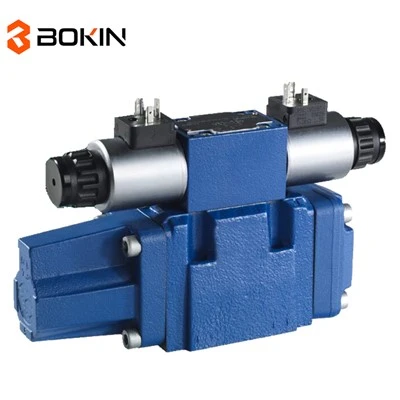
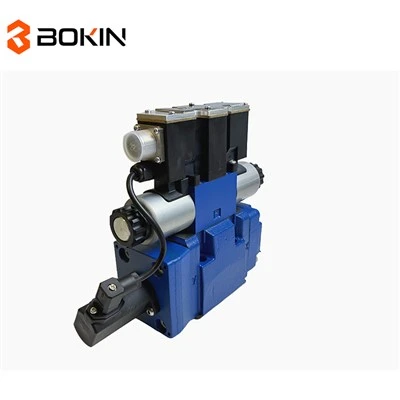
We offer a range of pilot-operated proportional directional control valves, including the Pilot-Operated Hydraulic Valve 4WRLE27 A1 10V OBE Position Feedback, Pilot-Operated Hydraulic Valve 4WRLE16 A1 10V OBE Position Feedback, and Pilot-Operated Hydraulic Valve 4WRLE25 A1 10V OBE Position Feedback. These valves are designed to provide precise control of fluid flow and direction in a wide range of industrial applications.
Servo Proportional Directional Control Valves
Servo proportional directional control valves are the most advanced type of proportional valve. They use a servo motor to control the position of the spool, which provides extremely precise control over the flow of fluid. Servo proportional valves are typically used in applications where high precision and accuracy are required, such as in robotics and aerospace.
The main advantage of servo proportional valves is their high level of precision and accuracy. They can provide extremely fine control over the flow of fluid, which is essential in applications where precise positioning and movement are required. However, they are also the most expensive and complex type of proportional valve and require specialized knowledge and skills to install and maintain.
Applications of Proportional Directional Control Valves
Proportional directional control valves are used in a wide range of industrial applications, including:
Manufacturing
In the manufacturing industry, proportional directional control valves are used to control the movement of hydraulic actuators in machines such as presses, injection molding machines, and machine tools. These valves enable precise control of the force and speed of the actuators, ensuring accurate and efficient operation.
Construction
In the construction industry, proportional directional control valves are used in hydraulic equipment such as excavators, loaders, and cranes. These valves allow operators to control the movement of the equipment with precision, enabling them to perform tasks such as digging, lifting, and moving heavy loads.
Agriculture
In the agriculture industry, proportional directional control valves are used in hydraulic systems in tractors, combines, and other agricultural equipment. These valves enable precise control of the movement of the equipment, allowing farmers to perform tasks such as plowing, planting, and harvesting with greater efficiency.
Transportation
In the transportation industry, proportional directional control valves are used in hydraulic systems in vehicles such as trucks, buses, and trains. These valves enable precise control of the braking, steering, and suspension systems, ensuring safe and efficient operation.
Choosing the Right Proportional Directional Control Valve
When choosing a proportional directional control valve, it is important to consider several factors, including:
Flow Rate
The flow rate of the valve is an important consideration, as it determines the amount of fluid that can pass through the valve. The flow rate required will depend on the application and the size of the hydraulic system.


Pressure Rating
The pressure rating of the valve is also an important consideration, as it determines the maximum pressure that the valve can withstand. The pressure rating required will depend on the application and the operating conditions of the hydraulic system.
Control Accuracy
The control accuracy of the valve is another important consideration, as it determines how precisely the valve can control the flow of fluid. The control accuracy required will depend on the application and the level of precision required.
Response Time
The response time of the valve is also an important consideration, as it determines how quickly the valve can respond to changes in the input signal. The response time required will depend on the application and the speed of the hydraulic system.
Conclusion
Proportional directional control valves are essential components in hydraulic systems, enabling precise control of fluid flow, pressure, and direction. As a leading supplier of proportional directional control valves, we offer a comprehensive range of products to meet the diverse needs of our customers. Whether you are looking for a direct-acting, pilot-operated, or servo proportional valve, we have the expertise and experience to help you choose the right valve for your application.
If you are interested in learning more about our proportional directional control valves or would like to discuss your specific requirements, please contact us. Our team of experts will be happy to assist you in finding the right solution for your hydraulic system.
References
- Bosch Rexroth, "Hydraulic Components and Systems," Bosch Rexroth AG, 2023.
- Parker Hannifin, "Proportional Valves," Parker Hannifin Corporation, 2023.
- Eaton, "Hydraulic Valves," Eaton Corporation, 2023.