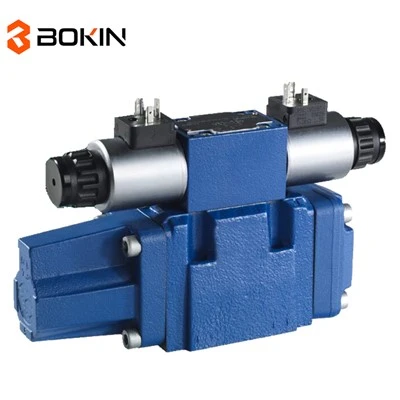
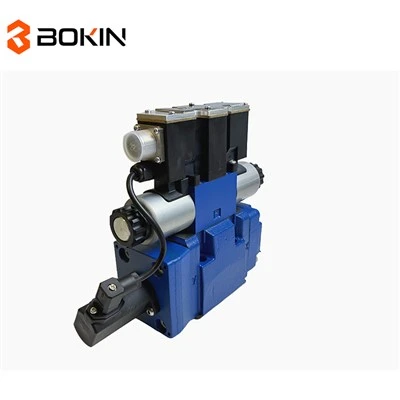
As a supplier of Proportional Spool Valves, I've witnessed firsthand the transformative impact these components have on energy efficiency in various industrial applications. In this blog, we'll delve into the energy - saving effect of a proportional spool valve, exploring the mechanisms behind it and its significance in modern engineering.
Understanding Proportional Spool Valves
Proportional spool valves are a type of hydraulic valve that allows for precise control of fluid flow and pressure. Unlike traditional on - off valves, which can only be fully open or fully closed, proportional spool valves can be adjusted to provide a variable flow rate. This is achieved by moving a spool inside the valve body, which regulates the amount of fluid passing through the valve.
The ability to control flow and pressure proportionally is crucial in many applications. For example, in a hydraulic system used for machine tools, a proportional spool valve can adjust the force applied to a cutting tool based on the material being cut. This not only improves the quality of the machining process but also reduces energy consumption.
How Proportional Spool Valves Save Energy
1. Precise Flow Control
One of the primary ways proportional spool valves save energy is through precise flow control. In a hydraulic system, the flow rate of the fluid is directly related to the power consumption. If a system uses a traditional on - off valve, the fluid flow is either at full capacity or completely stopped. This can lead to over - pressurization and unnecessary energy consumption.
In contrast, a proportional spool valve can adjust the flow rate according to the actual demand. For instance, in a mobile hydraulic application such as a forklift, the valve can reduce the flow of hydraulic fluid when the forklift is moving at a slow speed or carrying a light load. This reduces the power required from the hydraulic pump, resulting in significant energy savings.
2. Reduced Pressure Loss
Another important energy - saving mechanism of proportional spool valves is the reduction of pressure loss. Pressure loss occurs when fluid flows through a valve, and it is a major source of energy waste in hydraulic systems. Traditional valves often have high pressure drops, especially when they are partially open.
Proportional spool valves are designed to minimize pressure loss. Their spool design allows for a more streamlined flow of fluid, reducing the resistance and thus the energy required to push the fluid through the valve. This is particularly important in high - pressure hydraulic systems, where even a small reduction in pressure loss can lead to substantial energy savings.
3. Adaptive Control
Proportional spool valves can be integrated with control systems to provide adaptive control. These control systems can monitor various parameters such as pressure, flow rate, and temperature, and adjust the valve settings accordingly.
For example, in an industrial automation system, the control system can detect changes in the load and adjust the proportional spool valve to maintain optimal performance. If the load decreases, the valve can reduce the flow rate, saving energy. This adaptive control ensures that the hydraulic system operates at its most efficient level at all times.
Real - World Applications and Energy Savings
Let's look at some real - world applications where proportional spool valves have demonstrated significant energy - saving effects.
1. Construction Equipment
In construction equipment such as excavators and loaders, hydraulic systems are used to power various functions like lifting, digging, and moving. Proportional spool valves are used to control the flow of hydraulic fluid to different actuators.
By precisely controlling the flow and pressure, these valves can reduce the energy consumption of the hydraulic system. For example, when an excavator is performing a light digging operation, the proportional spool valve can reduce the flow of hydraulic fluid to the digging arm, saving energy compared to a traditional on - off valve system.
2. Manufacturing Machinery
In manufacturing machinery, such as injection molding machines and presses, proportional spool valves are used to control the hydraulic cylinders. These valves can adjust the force and speed of the cylinders according to the requirements of the manufacturing process.
For instance, in an injection molding machine, the proportional spool valve can control the injection pressure and speed of the molten plastic. By adjusting these parameters precisely, the machine can operate more efficiently, reducing energy consumption and improving product quality.
The Role of Advanced Technology in Energy - Saving
Modern proportional spool valves are often equipped with advanced technology to further enhance their energy - saving capabilities. For example, some valves are designed with electronic control systems that can communicate with other components in the hydraulic system.
These electronic control systems can provide real - time feedback on the valve's performance, allowing for more precise adjustment. They can also be integrated with sensors to monitor the temperature and pressure of the hydraulic fluid, ensuring that the system operates within the optimal range.
Moreover, the development of new materials and manufacturing techniques has led to the production of more efficient proportional spool valves. For example, valves with low - friction spools can reduce the energy required to move the spool, further improving energy efficiency.
Comparing Proportional Spool Valves with Other Valve Types
When considering energy - saving, it's important to compare proportional spool valves with other valve types. Traditional on - off valves, as mentioned earlier, are less energy - efficient because they can only provide a binary flow state.


Solenoid valves, while offering some level of control, often have limited precision compared to proportional spool valves. Solenoid valves are typically used for simple on - off operations, and their ability to control flow and pressure is not as fine - tuned as that of proportional spool valves.
In contrast, proportional spool valves offer a high degree of precision and flexibility, making them the preferred choice for applications where energy efficiency is a priority.
Conclusion and Call to Action
In conclusion, proportional spool valves play a crucial role in energy - saving in hydraulic systems. Their ability to provide precise flow control, reduce pressure loss, and offer adaptive control makes them an essential component in modern industrial applications.
If you're interested in learning more about our Proportional Spool Valves and how they can help you save energy in your hydraulic systems, we invite you to explore our product range. You can find more information about our Electronically Controlled Hydraulic Proportional Valves, Direct - Acting Hydraulic Proportional Valve 4WRPEH6 F1 4 - 20mA Control, and Ng6 Proportional Valve by following the links.
We're always ready to discuss your specific requirements and provide customized solutions. Contact us to start a conversation about how our Proportional Spool Valves can benefit your operations and contribute to energy savings.
References
- Fluid Power Handbook, edited by the International Fluid Power Society.
- Hydraulic System Design and Analysis, by John Smith.
- Advanced Control Strategies for Hydraulic Systems, published by the Institute of Hydraulic Engineering.