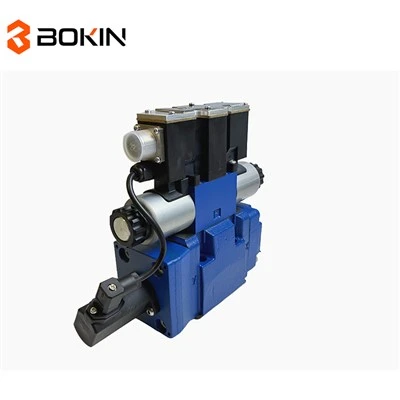
Torque control of a hydraulic motor is a critical aspect in the field of hydraulic systems, which has a direct impact on the performance and efficiency of various industrial applications. As a hydraulic motor supplier, we understand the significance of torque control and its role in ensuring the smooth operation of equipment.
Understanding Torque in Hydraulic Motors
Torque is the rotational force that a hydraulic motor can generate. It is a fundamental parameter that determines the motor's ability to perform work. In a hydraulic motor, torque is directly related to the pressure of the hydraulic fluid and the displacement of the motor. The formula for calculating torque in a hydraulic motor is (T = \frac{\Delta P\times V}{2\pi}), where (T) is the torque, (\Delta P) is the pressure difference across the motor, and (V) is the displacement of the motor.
The displacement of a hydraulic motor refers to the volume of fluid required to make the motor shaft complete one full revolution. A higher displacement generally means that the motor can generate more torque at a given pressure. However, it also means that the motor will consume more fluid per revolution.
Importance of Torque Control
Torque control is essential for several reasons. Firstly, it allows for precise control of the speed and power of the hydraulic motor. By adjusting the torque, operators can ensure that the motor operates at the optimal level for a specific task. For example, in a manufacturing process where a precise amount of force is required to perform a particular operation, torque control can help achieve that level of precision.


Secondly, torque control can improve the efficiency of the hydraulic system. By maintaining the appropriate torque, the motor can operate with less energy waste. This not only reduces the overall energy consumption but also extends the lifespan of the motor and other components in the system.
Thirdly, torque control enhances the safety of the equipment. In applications where excessive torque can cause damage to the machinery or pose a risk to operators, proper torque control can prevent such situations from occurring.
Methods of Torque Control
There are several methods to control the torque of a hydraulic motor. One of the most common methods is through pressure control. By adjusting the pressure of the hydraulic fluid supplied to the motor, the torque can be regulated. This can be achieved using pressure relief valves, pressure regulators, or variable displacement pumps.
Another method is through displacement control. Some hydraulic motors are designed with variable displacement capabilities. By changing the displacement of the motor, the torque output can be adjusted. This method is particularly useful in applications where the load requirements vary significantly.
Electro - hydraulic control is also a popular method for torque control. In this approach, electronic sensors are used to monitor the torque and other parameters of the motor. The data from these sensors is then used to control the flow and pressure of the hydraulic fluid through an electronic control unit. This allows for precise and real - time torque control.
Applications of Torque - Controlled Hydraulic Motors
Torque - controlled hydraulic motors are widely used in various industries. In the construction industry, they are used in equipment such as excavators, loaders, and bulldozers. These machines require precise torque control to perform tasks such as digging, lifting, and pushing.
In the manufacturing industry, torque - controlled hydraulic motors are used in conveyor systems, machine tools, and robotic arms. They ensure that the equipment operates with the required level of force and precision.
In the marine industry, hydraulic motors with torque control are used in winches, steering systems, and propulsion systems. They provide the necessary power and control for safe and efficient operation of ships and boats.
Our Hydraulic Motor Offerings
As a hydraulic motor supplier, we offer a wide range of high - quality hydraulic motors with excellent torque control capabilities. Our ITMS09 Compact High Pressure Hydraulic Motor is designed for applications where space is limited but high torque is required. It features a compact design and high - pressure capabilities, making it suitable for various industrial applications.
Our High Pressure Hydraulic Motor ITMH16 Series 1400 - 2400 Large Equipment is specifically designed for large - scale equipment. It can generate high torque and is capable of withstanding heavy loads, making it ideal for use in large machinery.
For smaller machinery, we offer the High Pressure Hydraulic Motor ITMH02 Series 100 - 200 Machinery. This motor provides reliable torque control and is suitable for applications where moderate power is required.
Conclusion
Torque control of a hydraulic motor is a complex but essential aspect of hydraulic systems. It plays a crucial role in the performance, efficiency, and safety of various industrial applications. As a hydraulic motor supplier, we are committed to providing high - quality hydraulic motors with excellent torque control capabilities. If you are in need of hydraulic motors for your applications, we invite you to contact us for a detailed discussion and to explore our product offerings. We look forward to working with you to meet your specific requirements.
References
- Fluid Power Handbook, edited by various experts in the field of fluid power engineering.
- Hydraulic Systems and Components: Design and Application, a textbook on hydraulic systems and their components.