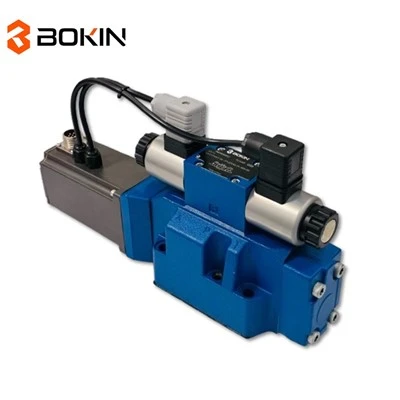
Hydraulic control valves regulate pressure, flow, and direction to drive cylinders and motors. Understanding the four classification frameworks used in the industry simplifies selection, specification, and troubleshooting.

By function - the most common field classification:
Pressure control valves: relief valves, pressure reducing valves, sequence valves - manage system pressure limits and branch circuit pressure levels.
Flow control valves: throttle valves, flow control valves - regulate actuator speed by controlling oil volume.
Directional control valves: check valves and directional (spool) valves - determine which path oil takes and which actuator moves.
By spool structure - three types cover over 90% of industrial equipment:
Sliding spool valves: cylindrical spool geometry used in virtually all directional valves. Flow follows the orifice equation: Q = Cd × πD × x × √(2Δp/ρ), where x is the spool displacement.
Poppet (cone) valves: conical sealing surfaces offering superior leak-tight closure - the dominant structure in cartridge valves.
Ball valves: spherical sealing elements with fast response, common in small check valves and high-pressure shut-off circuits.
By control signal:
On/off or fixed-setting valves: basic manual or solenoid directional valves with two discrete states.
Proportional valves: output pressure and flow vary linearly with the electrical input signal for precise speed or pressure regulation.
Servo valves: high-precision closed-loop control for CNC machines, aerospace, and precision test rigs.
Digital valves: interface directly with PLC bus protocols without D/A conversion, ideal for automated production lines.
By mounting type - five installation formats with distinct trade-offs:
Threaded connection (in-line): direct pipe thread mounting. Simple but messy pipe layouts with many potential leak points.
Subplate mounting: valves bolted to a machined manifold plate with internal port drillings - clean, maintainable, the standard for machine tools.
Sandwich (modular) mounting: stackable valve modules with internal passages, eliminating separate manifold plates - flexible for system upgrades.
Cartridge mounting: valve sleeve and poppet inserted into a manifold cavity - compact with high flow capacity, dominant in large hydraulic power units and injection molding machines.
For electro-hydraulic systems in injection molding, die casting, and industrial automation, selecting valves with the correct mounting interface and control signal type determines both performance and long-term maintainability.