A hydraulic valve's spool geometry determines its sealing performance, flow characteristic, and suitability for different applications. Three spool structures dominate industrial hydraulics, each with distinct advantages.

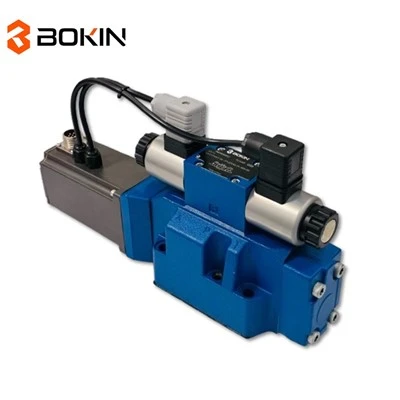
Sliding spool valves use a cylindrical spool moving within a precision bore. The annular opening between the spool land and the valve body port edge creates a variable orifice. Flow through this orifice follows the well-known relationship Q = Cd × πD × x × √(2Δp/ρ), where Cd is the discharge coefficient, D is the spool diameter, x is the spool displacement, Δp is the pressure drop, and ρ is the oil density. Because flow is proportional to spool displacement multiplied by the square root of pressure differential, sliding spool valves provide smooth, proportional flow control - which is why virtually all directional control valves and Rexroth Type proportional directional valves use this structure.
The key limitation of sliding spool valves is internal leakage. The spool-to-bore clearance (typically 3-8 μm radial) creates a leakage path that never fully seals. For applications requiring absolute zero-leakage shut-off, poppet valves are preferred.
Poppet (cone) valves achieve sealing through a conical metal-to-metal seat. When closed, the cone face presses against a matching seat surface, providing near-zero leakage. This makes poppet valves the standard structure for two-way cartridge valves (logic elements), pilot-operated check valves, and pressure relief valve main stages. The trade-off is that poppet valves are inherently directional - they seal in one direction only unless mechanically held open.
Ball valves use a spherical sealing element that seats against a conical or flat surface. The spherical geometry provides self-centering action, fast response, and excellent contamination resistance compared to sliding spool designs. Ball check valves are widely used in small-bore circuits, high-pressure dead-end applications, and as pilot elements in complex hydraulic manifolds. Their main limitation is limited flow capacity due to the small effective flow area around the ball.
For valve selection, the material choice also matters. Spools are typically hardened steel or nitrided steel; seats may be steel-on-steel (durable but zero tolerance for contamination) or incorporate soft seals such as NBR or FKM for improved low-pressure sealing.