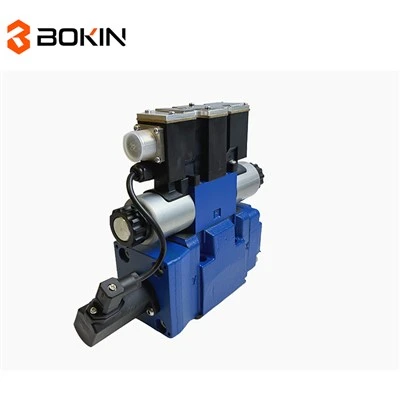
Hey there! As a 4WRZ supplier, I often get asked how to expand 4WRZ. Well, let's dive right into it and break it down step by step.
First off, what the heck is 4WRZ? 4WRZ refers to a series of Pilot - Operated Hydraulic Proportional Valves. These valves are super important in the hydraulic system, as they can precisely control the flow and pressure of the hydraulic fluid. They're used in a wide range of applications, from industrial machinery to mobile equipment.


Now, let's talk about expanding 4WRZ. When we say expand, we're talking about increasing its functionality, improving its performance, or adapting it to different working conditions.
Understanding the Basics of 4WRZ
Before we expand 4WRZ, we need to understand its basic structure and working principle. A 4WRZ valve typically consists of a main valve and a pilot valve. The pilot valve controls the main valve, and by adjusting the electrical signal input to the pilot valve, we can control the flow and pressure of the hydraulic fluid passing through the main valve.
Ways to Expand 4WRZ
1. Upgrade the Control System
One of the most common ways to expand 4WRZ is to upgrade its control system. With the development of technology, modern control systems offer more precise and flexible control. For example, we can use digital control systems instead of traditional analog ones. Digital control systems can provide more accurate control signals, which can improve the response speed and control accuracy of the 4WRZ valve.
2. Add Auxiliary Functions
We can also expand 4WRZ by adding auxiliary functions. For instance, we can add a pressure - relief function. This function can protect the hydraulic system from over - pressure, preventing damage to the system components. Another useful auxiliary function is the flow - limiting function. By limiting the flow rate, we can ensure that the hydraulic system operates within a safe range.
3. Adapt to Different Working Conditions
4WRZ valves are used in various working conditions. To expand its application scope, we need to make it adaptable to different working conditions. For example, in high - temperature environments, we can use special materials for the valve body and seals to ensure its normal operation. In dusty environments, we can add dust - proof devices to prevent dust from entering the valve.
Specific Models of 4WRZ
There are different models of 4WRZ valves, each with its own characteristics and application scenarios.
- Pilot - Operated Hydraulic Proportional Valve 4WRZ10: This is a relatively small - sized valve, suitable for applications with relatively low flow requirements. It's often used in some precision hydraulic systems, such as in small - scale industrial machinery. You can find more information about it here.
- Pilot - Operated Hydraulic Proportional Valve 4WRZ16: With a medium - sized flow capacity, this valve is widely used in many industrial applications. It can handle a moderate amount of hydraulic fluid flow, making it a popular choice for a variety of hydraulic systems. Check out the details here.
- Pilot - Operated Hydraulic Proportional Valve 4WRZ32: This is a large - sized valve with a high flow capacity. It's mainly used in heavy - duty hydraulic systems, such as in large construction machinery and mining equipment. More info about it can be found here.
Considerations When Expanding 4WRZ
When expanding 4WRZ, there are several things we need to consider.
1. Compatibility
We need to ensure that any upgrades or additions are compatible with the existing 4WRZ valve and the hydraulic system. For example, if we want to add an auxiliary function, we need to make sure that the new function won't interfere with the normal operation of the valve.
2. Cost - Benefit Analysis
Expanding 4WRZ often involves some costs, such as the cost of upgrading the control system or adding auxiliary functions. We need to conduct a cost - benefit analysis to ensure that the investment is worthwhile.
3. Safety
Safety is always a top priority. When expanding 4WRZ, we need to ensure that the expanded system meets all safety standards. For example, if we add a pressure - relief function, we need to make sure that it can work effectively in case of over - pressure.
Conclusion
Expanding 4WRZ is a process that requires a good understanding of the valve's structure and working principle, as well as careful consideration of various factors. Whether it's upgrading the control system, adding auxiliary functions, or adapting to different working conditions, we need to make sure that the expansion is safe, cost - effective, and compatible with the existing system.
If you're interested in our 4WRZ products or have any questions about expanding 4WRZ, feel free to reach out to us for a purchase negotiation. We're here to help you find the best solution for your hydraulic system needs.
References
- Hydraulic System Design and Application Handbook
- Proportional Valve Technology Manuals