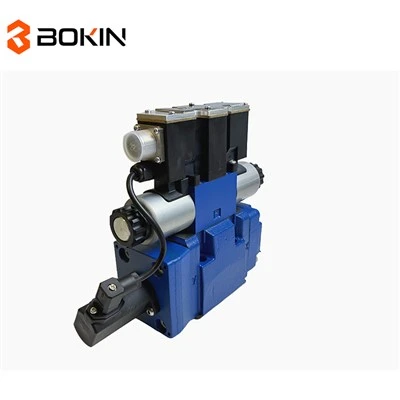
Hey there! As a supplier of Proportional Directional Control Valves, I've seen firsthand the challenges that come with installing these valves in compact spaces. It's not always a walk in the park, but with the right approach, it can be done smoothly. In this blog, I'm gonna share some tips and tricks on how to install a Proportional Directional Control Valve in a tight spot.
First off, let's talk a bit about what a Proportional Directional Control Valve is. If you're not familiar, you can check out this Proportional Directional Control Valve for more info. These valves are crucial in hydraulic systems as they control the flow and direction of hydraulic fluid. They offer precise control, which is super important in many industrial applications.
Now, when it comes to installing in a compact space, the first thing you need to do is plan ahead. Take a good look at the area where you're gonna install the valve. Measure the available space carefully. You need to make sure that the valve will fit without any issues. Also, consider the access points. You'll need to be able to reach the valve for maintenance and adjustments later on.
One of the valves we offer, the Pilot-Operated Hydraulic Valve 4WRJE27 A1 10V OBE Position Feedback, is a great option for compact spaces. It's designed to be relatively small and can fit into tight areas. But even with a smaller valve, you still need to be strategic about the installation.
Before you start the installation, gather all the necessary tools. You'll probably need wrenches, screwdrivers, and maybe some sealants. Make sure you have everything on hand so you don't have to stop in the middle of the installation to go looking for something.
When you're ready to install the valve, start by cleaning the mounting surface. Any dirt or debris on the surface can cause leaks or improper seating of the valve. Use a clean cloth and some solvent to wipe down the area.
Next, carefully position the valve on the mounting surface. Make sure it's aligned correctly. You might need to use some alignment tools or guides to help with this. Once it's in place, start tightening the bolts or screws. But don't over-tighten them. Over-tightening can damage the valve or the mounting surface.
After the valve is mounted, it's time to connect the hydraulic lines. This is a critical step. Make sure you connect the lines to the correct ports on the valve. Double-check the markings on the valve and the lines to avoid any mistakes. You might also want to use some thread sealant on the connections to prevent leaks.
Once the lines are connected, it's a good idea to do a quick inspection. Check for any loose connections or signs of damage. If everything looks good, you can start testing the valve.
Testing the valve is an important part of the installation process. You need to make sure it's working properly. Start by turning on the hydraulic system and slowly increasing the pressure. Observe the valve's operation. Check for any abnormal noises or vibrations. If you notice anything strange, stop the system immediately and check for the problem.
Another valve that's suitable for compact spaces is the Pilot-Operated Hydraulic Valve 4WRJE25 A1 10V OBE Position Feedback. It has similar features to the 4WRJE27 but might be a better fit depending on your specific requirements.
In addition to the physical installation, you also need to consider the electrical connections. Proportional Directional Control Valves often require electrical signals to operate. Make sure you follow the wiring diagram provided by the manufacturer. Incorrect wiring can lead to malfunctions or even damage to the valve.
When working in a compact space, it can be a bit tricky to access all the components. You might need to use some flexible tools or reach-around devices to get to the hard-to-reach areas. Don't be afraid to get creative with your approach.
Also, keep in mind that safety is always a top priority. Wear appropriate safety gear, such as gloves and safety glasses. Make sure the hydraulic system is shut off before you start working on the valve.
If you run into any problems during the installation, don't hesitate to reach out for help. As a supplier, we're here to support you. We have a team of experts who can answer your questions and provide guidance.
In conclusion, installing a Proportional Directional Control Valve in a compact space is definitely doable. With proper planning, the right tools, and a bit of patience, you can get the job done. If you're in the market for a Proportional Directional Control Valve or need more information about installation, feel free to get in touch with us. We're always happy to discuss your needs and help you find the best solution.


References:
- Manufacturer's installation manuals for Proportional Directional Control Valves
- Industry best practices for hydraulic system installation