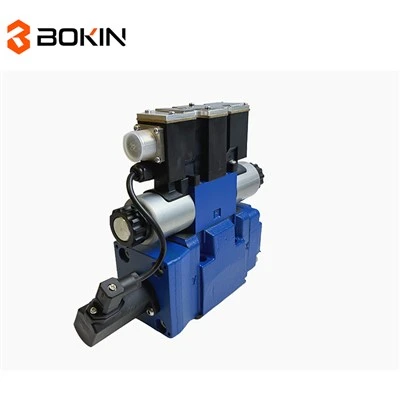
In the intricate world of fluid control systems, proportional spool valves play a pivotal role. As a supplier of Proportional Spool Valve, I have witnessed firsthand the significance of every component within these valves, especially the spring. In this blog, we will delve deep into the role of the spring in a proportional spool valve and understand its impact on the valve's performance.
Basic Structure and Working Principle of Proportional Spool Valves
Before we explore the role of the spring, let's briefly understand the basic structure and working principle of proportional spool valves. A proportional spool valve consists of a spool that slides within a valve body. The position of the spool determines the flow rate and direction of the fluid passing through the valve. The spool is actuated by an electromagnetic force generated by a solenoid. By varying the electrical current supplied to the solenoid, the position of the spool can be precisely controlled, allowing for proportional control of the fluid flow.
The Role of the Spring in a Proportional Spool Valve
1. Providing a Return Force
One of the primary functions of the spring in a proportional spool valve is to provide a return force. When the electrical current to the solenoid is removed, the spring pushes the spool back to its original position. This ensures that the valve returns to a known and stable state when there is no external control signal. For example, in a Direct-Acting Hydraulic Proportional Valve 4WRPEH10 F1 4 - 20mA Control, the spring acts as a fail - safe mechanism. If there is a power failure or a malfunction in the control system, the spring will force the spool back to its initial position, preventing any unexpected fluid flow and ensuring the safety of the system.
2. Controlling the Spool Position
The spring also plays a crucial role in controlling the spool position. The force exerted by the spring opposes the electromagnetic force generated by the solenoid. When the solenoid is energized, the electromagnetic force moves the spool against the spring force. The equilibrium position of the spool is determined by the balance between the electromagnetic force and the spring force. By adjusting the spring stiffness and pre - load, the relationship between the electrical input and the spool position can be fine - tuned. This allows for precise control of the fluid flow rate and direction. In a Direct-Acting Hydraulic Proportional Valve 4WRPEH10 A1 10V Control, the spring characteristics are carefully designed to ensure accurate and repeatable spool movement in response to the input voltage.
3. Damping and Stability
The spring contributes to the damping and stability of the spool movement. When the spool moves, the spring resists rapid changes in position, acting as a damper. This helps to reduce oscillations and vibrations of the spool, ensuring smooth and stable operation of the valve. Without proper damping, the spool may oscillate around its desired position, leading to inaccurate flow control and potential damage to the valve components. The spring's ability to dampen the spool movement is particularly important in high - speed or high - precision applications.
4. Compensation for External Forces
In a real - world fluid control system, the spool may be subjected to various external forces, such as fluid pressure, friction, and inertia. The spring can help to compensate for these external forces. For example, if there is a sudden increase in fluid pressure, the spring can counteract the force exerted on the spool, maintaining the spool's position and ensuring stable flow control. This compensation ability is essential for the reliable operation of the proportional spool valve in different operating conditions.
Impact of Spring Characteristics on Valve Performance
1. Spring Stiffness
The stiffness of the spring has a significant impact on the valve's performance. A stiffer spring requires a higher electromagnetic force to move the spool. This means that a valve with a stiffer spring can handle higher fluid pressures and forces without significant spool displacement. However, it also requires a more powerful solenoid to actuate the spool. On the other hand, a softer spring allows for easier spool movement with a lower electromagnetic force, but it may be more susceptible to external forces and may not provide as much stability.
2. Pre - load
The pre - load of the spring is the initial force applied to the spring when the spool is in its rest position. Adjusting the pre - load can change the starting point of the spool movement and the relationship between the electrical input and the spool position. A higher pre - load can increase the valve's sensitivity to small changes in the electrical input, while a lower pre - load can provide a wider range of spool movement.
3. Spring Material
The material of the spring also affects its performance. Springs are typically made of materials such as stainless steel or alloy steel. These materials offer good elasticity, corrosion resistance, and fatigue strength. The choice of spring material depends on the specific application requirements, such as the operating temperature, fluid compatibility, and expected service life.
Importance of Spring Selection in Proportional Spool Valves
Selecting the right spring for a proportional spool valve is crucial for achieving optimal performance. The spring must be carefully chosen based on the valve's specifications, such as the maximum flow rate, pressure range, and control accuracy. A well - selected spring can ensure smooth and precise operation of the valve, while a poorly chosen spring can lead to problems such as inaccurate flow control, excessive wear, and premature failure.
Conclusion
In conclusion, the spring in a proportional spool valve plays a multifaceted and crucial role. It provides a return force, controls the spool position, contributes to damping and stability, and compensates for external forces. The characteristics of the spring, such as stiffness, pre - load, and material, have a significant impact on the valve's performance. As a supplier of proportional spool valves, we understand the importance of the spring and ensure that our valves are equipped with high - quality springs that meet the specific requirements of our customers.


If you are interested in our Proportional Spool Valve products or have any questions about the role of the spring in these valves, we welcome you to contact us for further discussion and potential procurement. We are committed to providing you with the best solutions for your fluid control needs.
References
- "Fluid Power Engineering" by William Nash
- "Hydraulic Control Systems" by Donald E. Newell